


Floriography: The Secret Language of Flowers in the Victorian Era
Updated: Jul 30

If you received a bouquet of flowers from a colleague, friend or co-worker your first move may be to thank them and find a pretty vase to display them in. However, if you were living in the 19th century you may have just received a hidden message.

History is riddled with stories of women in society utilizing flowers to pass messages to lovers, friends and enemies. It’s been documented that harem women utilized “Floriography” in order to communicate without their guard's knowledge. By 1810 French publishers began putting out flower dictionaries that detailed many different floral codes collected over the years.

So where do these meanings come from?

Some of the hidden meanings come directly from the root name, which was sometimes based on mythology, i.e. “narcissus” would correspond to egotism. Other meanings came from the flowers directly. The colors, medical properties and even “magical” superstition surrounding these flowers helped create this hidden “language.” Here are some of the more obvious connections from the Victorian Era:
Cabbage – Looks like cash, meaning wealth, profit or money
Walnuts – Symbolized intellect as they resemble a brain
Pennyroyal, Rue and Tansy – Often used in teas as abortifacients. These flowers in a bouquet often symbolized “you must leave,” disdain or war

"Haughtiness" was symbolized by the Sunflower due to its exaggerated size.

However, not all the meanings were as easy to derive. Some of the following make less sense:
Hydrangea – Heartless
Delphinium – Haughty
Azelea – Take Care of Yourself
Buttercup – Childishness
Basil – I hate you
Dill – Lust
Stripped Carnation – No, Refusal
Oleander – Beware
Birds-foot Trefoil – My Revenge (The flower to give passive aggressively)
Green Carnations – Homosexuality
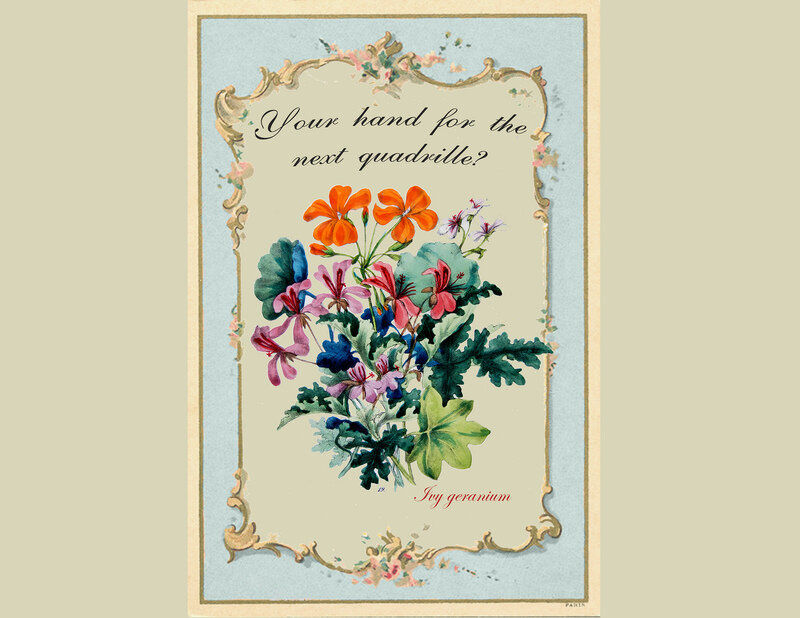
Authors also used floral decoding in literary novels like Jane Eyre. In chapter nine, Charlotte Brontë references that Jane looks at “snowdrops, crocuses, purple auriculas and gold eyed pansies” – which corresponds to her feeling “hopeful, cheerful, modest and preoccupied."


To learn more about Floriography and the Language of Flowers visit: Atlas Obscura

For anyone interested in this subject, this could be another useful reference: https://infowomenspace.com. It covers a fairly broad range of topics.